
« À chaque nouvel embarquement, l’équipage au complet est tenu de participer à un certain nombre d’exercices, parmi lesquels l’exercice Incendie et Abandon Drill. Attentive à l’ambivalence du sens des mots, j’ai choisi Exercice Abandon comme titre de ce recueil qui s’accompagne d’une exposition. Abandonner, pour un marin, signifie quitter le navire. Pour l’artiste que je suis à ce moment-là, c’est accepter de perdre le contrôle. Confrontée des semaines durant au roulis et au tangage du cargo, un lâcher-prise s’est imposé dans mes expérimentations graphiques, me faisant abandonner la maîtrise du trait au profit d’un geste le plus neutre possible, alors juste tenu de capter en direct les mouvements de la mer et de cette coque d’acier. »


I’m leaving Les Glénans’ Concarneau base feeling like I’ve just had a massive shot of adrenaline injected straight into my muscles. Not only because we actually learned how to do that — intramuscular injections — but mostly because all these lessons, it’s my body that’s going to remember them.
Because knowing there’s a life raft on board is one thing — climbing into it, squeezed into a dry suit and getting flipped over with five other trainees until you find yourself upside down, head under water, trapped beneath your crewmates’ butts (themselves wedged in the raft), is another story entirely.
Because when, for five days, you practice emergency procedures for drowning, concussion, spinal injury, cardiac arrest, open fracture, hemorrhage — and more — your brain, that sneaky thing, can’t help but apply theory to practice. In this case: your boat and your crew. In this case: my son, my partner, my friends.
And you can’t help but think: why don’t we all know this stuff? Why didn’t they make us do an extra day of first aid at school instead of that pointless JAPD session where, in my case, they showed us a cannon capable — and I quote — of “taking out a marmot at 40 km.” (Yes, in Grenoble the references are a bit mountain-themed — we were aiming for the Vercors…)
I’m not sure I’ll remember everything. Five days is a lot. Not sure I’ll be as good at stitching up a friend as I was practicing on a pig’s foot. But I’ll hopefully have a few reflexes, a protocol to follow, something solid to stand on when your knees are shaking with fear.
So, thank you, Les Glénans — once again. Of all the courses I’ve taken there, this one shook me up the most — yes, even more than those offshore training sessions in February off Bréhat.
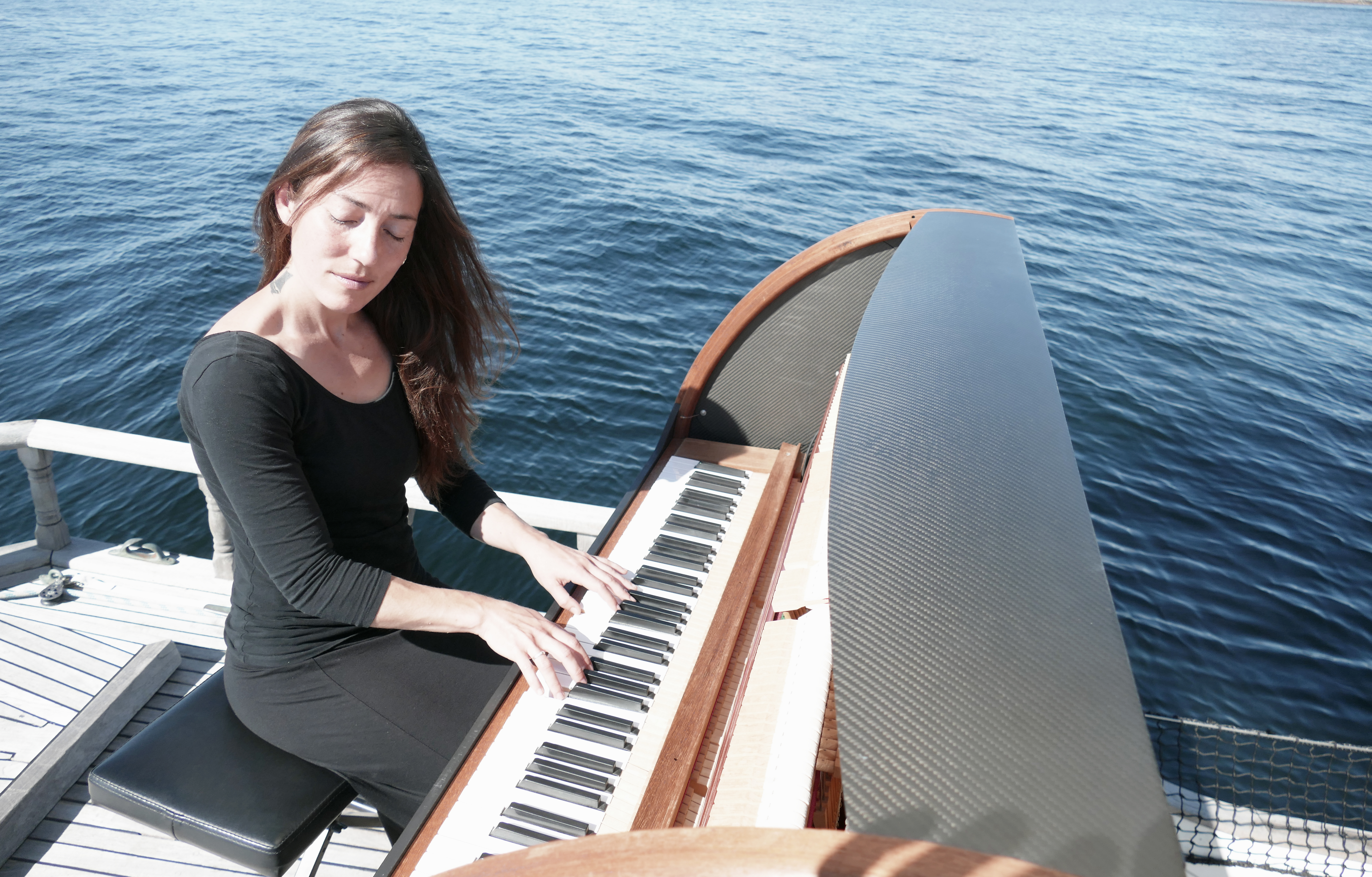
I do, however, highly recommend ending this training with a beautiful piano concert by Armel Dupas, whose generosity and gentleness are easily worth the painkillers recommended by the French Sailing Federation’s onboard pharmacy list.
And, because life always has a sense of mischief, the concert was accompanied by an exhibition by visual artist Delphine Soustelle Truchi, whose book Exercice Abandon — created during an artist residency aboard a cargo ship — gave me a lovely moment of perspective. From the back cover:
“With each new embarkation, the full crew must take part in a number of drills, including Fire Drill and Abandon Ship Drill. Sensitive to the ambiguity of words, I chose Exercice Abandon as the title of this collection, which comes with an exhibition. To abandon, for a sailor, means to leave the ship. For the artist I was then, it meant accepting to lose control. After weeks subjected to the roll and pitch of the cargo, a kind of letting go took hold in my graphic experiments, leading me to abandon mastery of the line in favor of a gesture as neutral as possible — one that merely sought to capture, in real time, the movements of the sea and of that steel hull.”
#PSMer #OffshoreMedicalTrainingFFVoile #LesGlénans #PianoPainkiller #ExerciceAbandon